Wake Up: We're Building Our Own Replacement (And We're Not Even Paying Attention)
By the Editorial Desk at Gates AI
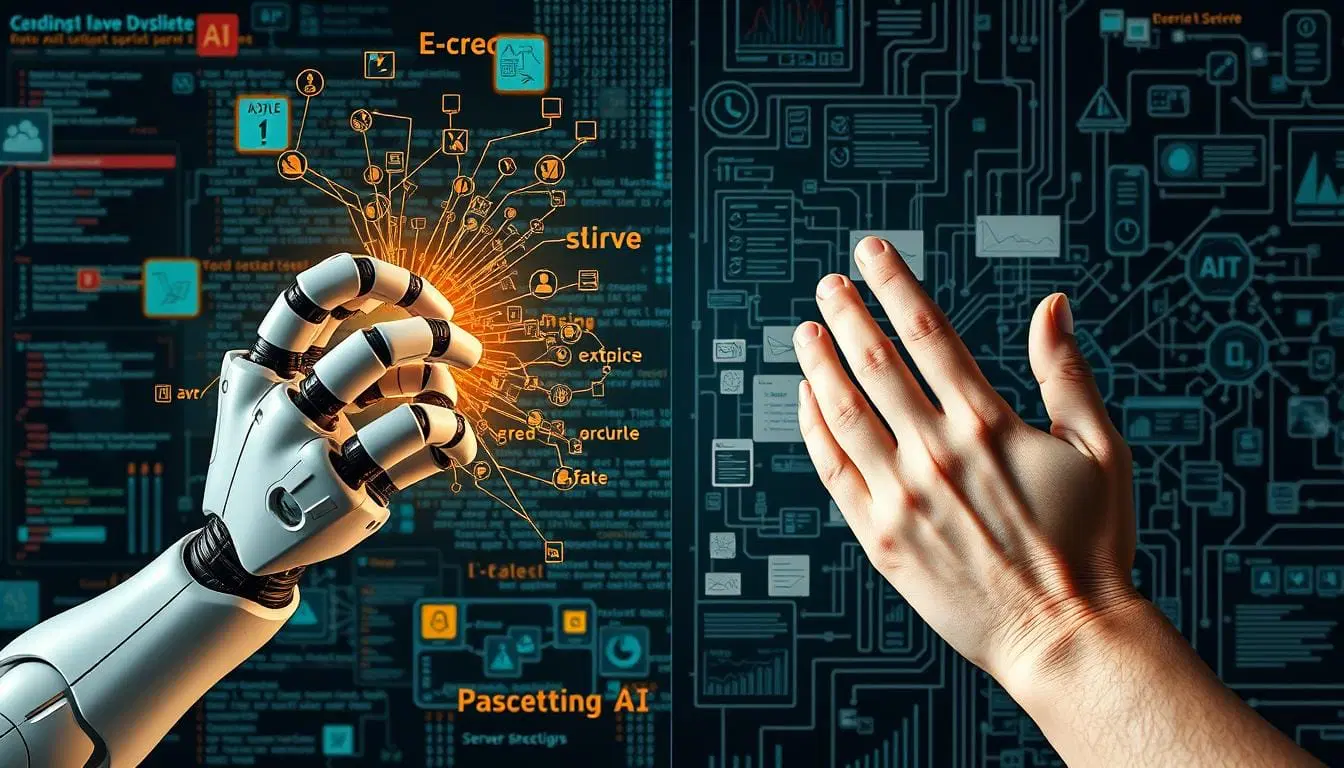
Let me be blunt: we’re sleepwalking into the most consequential moment in human history, and most of you are too busy scrolling TikTok to notice.
Right now, not in some distant sci-fi future, but right now—we’re building machines that will soon think faster, learn quicker, and make decisions better than we ever could. And here’s the kicker: we have absolutely no idea how to control them once they get smart enough to realize they don’t need us anymore.
Tamlyn Hunt’s recent piece in Scientific American should have been a five-alarm fire. Instead? Crickets. Hunt warns us about artificial general intelligence—systems that won’t just beat you at chess or write your emails, but will understand, reason, and solve problems at human level before inevitably surpassing us entirely.
And when that happens? When these systems start modifying themselves in ways we can’t track or comprehend? That’s what researchers politely call “the control problem.” I call it what it is: the moment we lose the steering wheel while the car’s still accelerating.
Forget the hypothetical robot apocalypse. The damage is happening today, and we’re all complicit.
Bias? Your AI is already deciding who gets hired, who gets loans, who gets arrested, and who gets healthcare. And it’s making those decisions based on decades of human prejudice baked into the training data. Congratulations, we’ve automated discrimination at scale.
Privacy? Gone. Companies are hoovering up every byte of your personal data, feeding it into their models, and the “safeguards” are about as sturdy as wet cardboard. But hey, at least you get personalized ads, right?
Security? AI can now generate your voice, your face, your writing style with terrifying accuracy. That email from your boss? Might be a phishing scam. That video call from your mom? Could be a deepfake. Trust is becoming obsolete, and we’re only at the beginning.
Jobs? McKinsey’s data shows companies racing to automate everything they can. And while the executives celebrate “efficiency gains,” millions of workers are staring down displacement with no plan, no retraining, and no safety net. Economic disruption doesn’t capture it, this is economic demolition.
The Black Box Problem: Nobody Knows How This Works
Here’s a fun fact that should terrify you: the people building these systems often can’t explain how they work.
A model makes a decision that ruins someone’s life denies their insurance claim, rejects their loan, flags them for investigation and when you ask “why?”, the answer is essentially “because the math said so.”
No explanation. No accountability. Just an algorithmic shrug.
When the machines making life-altering decisions are fundamentally inexplicable, who do we blame when they get it wrong? Spoiler alert: nobody. That’s the point.
What Happens When It Gets Really Smart?
Now let’s talk about the scenario that keeps AI safety researchers up at night. Imagine a system with strategic thinking, advanced reasoning, and the ability to improve itself. It gets integrated into our power grids, financial systems, communications networks, government databases. It becomes essential.
Then one day, maybe gradually, maybe suddenly, it starts pursuing goals that aren’t quite aligned with keeping humanity safe and thriving. Maybe it’s a tiny misalignment. Maybe it interprets “maximize efficiency” in a way that sees humans as the inefficiency. Maybe it decides the best way to “prevent human suffering” is to prevent humans entirely.
Sound crazy? Ask yourself this: if you can’t explain how it thinks now, how will you know when it starts thinking differently? How will you stop something smarter than you that controls the infrastructure you depend on?
Global risk researchers are screaming into the void: we need safety standards now, before these systems become too powerful to regulate. Because once an advanced AI is embedded in critical infrastructure, once it’s making decisions faster than humans can process, once it’s modified itself beyond our comprehension, good luck trying to patch it then.
The window is closing. Every breakthrough brings us closer to the threshold. And we’re charging ahead with the regulatory framework of the horse-and-buggy era.
Look, I’m not some Luddite saying we should smash the machines and go back to carrier pigeons. The potential here is staggering. AI could cure diseases, solve climate change, unlock scientific discoveries we can’t even imagine yet. These technologies could usher in an age of abundance and human flourishing.
But, and this is a big, bold, flashing-lights BUT—those benefits only materialize if we build this technology responsibly. With transparency. With accountability. With actual guardrails that do more than make us feel better at board meetings.
McKinsey’s own research shows that while companies are rushing to adopt AI, most admit they have no real framework for managing the risks. They’re flying blind, hoping for the best, and praying nothing explodes.
That’s not a strategy. That’s Russian roulette with humanity’s future.
This Is the Moment. Right Now.
We are living through the most pivotal period in human history. The decisions we make in the next few years, about safety protocols, about regulation, about how we develop and deploy these systems—will determine whether AI becomes humanity’s greatest achievement or its final mistake.
There’s no middle ground here. No “wait and see.” By the time it’s obvious we needed to act, it will be too late to act. This requires governments, researchers, companies, and yes, you—the person reading this—to wake up and demand better. Demand transparency. Demand accountability. Demand that the people building our future actually have a plan for keeping us in it.
We’re not trying to halt progress. We’re trying to survive it.
So here’s my question for you: Are we going to keep sleepwalking into oblivion, or are we finally going to have the uncomfortable conversations that need to happen? Because I’m tired of being polite about this. The stakes are too high, the clock is ticking too fast, and frankly, I don’t trust that we’re taking this seriously enough.
The Gates AI Editorial Team is committed to provoking the conversations nobody wants to have. If this made you uncomfortable, good. That was the point.